In partnership with

AI Spotlight — Would You Trust a Tiny Dental Robot?
|
AI
SPOTLIGHT
Would You Trust a Tiny Dental Robot?
A wine cork sized robot could soon reshape one of the most dreaded visits on your calendar, the dental crown appointment.
📖 6 minute read
|

|
|
Welcome Back,
Nobody hears the words you need a crown and feels excited. Most people immediately think about the drilling, the temporary crown, and the second visit that always seems to land at the worst possible time.
That entire process has stayed mostly unchanged for decades. Dentists remove decay, shape the tooth, take an impression, fit a temporary crown, and send the patient home to wait for the real one to be made.
Researchers at the University of Basel in Switzerland think a tiny robot could finally shorten that timeline. Their prototype is called MIR, short for Miniature Intraoral Robot, and it is designed to help prepare teeth for crowns with more precision and fewer follow up visits.
Today we are breaking down how this robot works, how small it really is, how accurate it has been in testing, and why it still has a long road before it reaches a real dental chair.
|
📌 In Today's AI Spotlight
- Why getting a crown takes more than one appointment today.
- How the tiny dental robot MIR actually works inside the mouth.
- How small and precise the current prototype really is.
- The safety features still missing before real world use.
- Our AI Spotlight analysis on what this means for patients.
|
🦷 Why Crowns Take So Many Visits
When tooth decay creates a large cavity, a dentist often needs to prepare the tooth for a crown rather than a simple filling. That process usually involves several separate steps completed across more than one appointment.
The dentist first removes the decayed material and fills the cavity. Next, the tooth gets shaped so a crown can fit properly over it. An impression is taken, a temporary crown is placed, and the patient goes home while the permanent crown is manufactured elsewhere.
Weeks later, the patient returns for a second visit so the permanent crown can finally be placed. It works, but it is slow, and it depends heavily on a dentist's hand steadiness across multiple sessions.
The goal behind MIR is simple. Move more of this process into a digital workflow so the crown can be ordered immediately instead of waiting for another appointment.
That is the exact gap the University of Basel research team set out to close, using robotics and digital scanning instead of the traditional manual process.
|
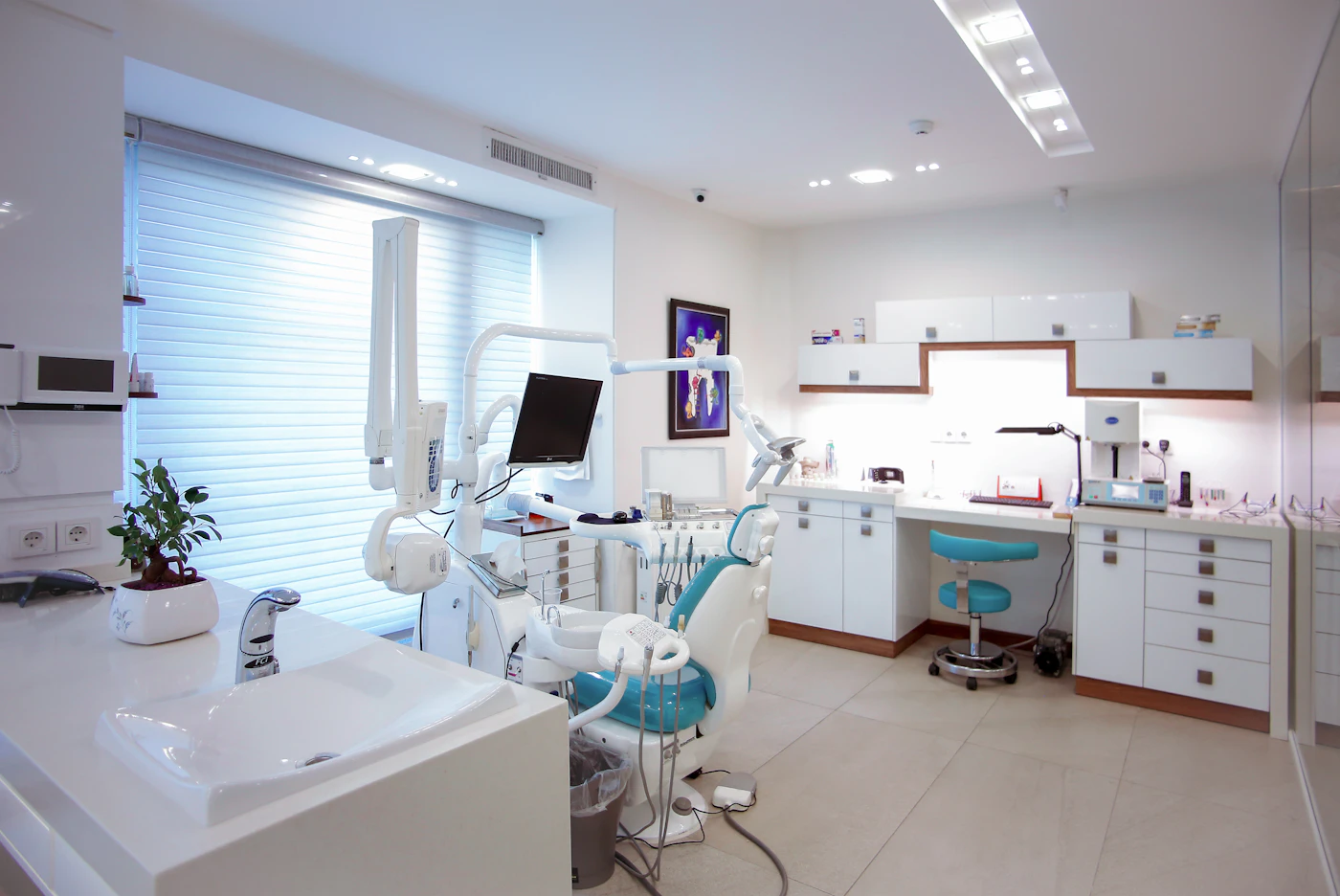
Digital scanning is already changing dentistry, and MIR is designed to build directly on that shift.
|
🤖 How MIR Actually Works
MIR is not a fully self contained robot floating inside your mouth. The larger motor and control components stay outside the mouth, while a small in mouth unit connects to them through flexible drive shafts, cables, and tubes.
The device attaches to a custom fitted dental splint made from a scan of the patient's own teeth. That splint links the robot directly to the teeth, so if the patient shifts or turns their head, the robot moves along with them instead of losing its position.
Anyone who has sat in a dental chair knows how hard it is to stay perfectly still. Even a small twitch can feel enormous when a drill is near a tooth, which is exactly the problem this splint based design is trying to solve.
MIR follows a digital treatment plan created after an initial scan. In testing, it prepared tooth models in two stages, first using a wider drill to reduce the top surface of the tooth, then switching to a longer and thinner drill to work carefully along the sides.
💡 AI Spotlight Take
This is not about replacing dentists. It is about pairing a steady, splint anchored robotic arm with a digital plan so the physical shaping step becomes more consistent and repeatable.
That combination of a fixed anchor point and a pre planned digital path is what allows the robot to work with precision, even though the mouth itself is never perfectly still.
|
|
You've seen the AI demos. Viktor does it without you watching.
The AI tool you tried last quarter waited for a prompt, hallucinated a number, then asked if you'd like a summary.
Viktor opened a PR at 2am, rebased it against main, ran your test suite, and posted a note in #eng: "Two flaky tests in payments service, both pre-existing. Recommended merging after fixing them." Then drafted the customer reply for the support ticket the bug created.
That's 619K autonomous actions per day across 20,000+ teams. Not chat replies. Real work shipped to GitHub, Stripe, Linear, Notion, and 3,000+ other tools, from inside Slack and Microsoft Teams.
You don't supervise him any more than you supervise a senior engineer.
SOC 2 certified. Your data never trains models.
"It's what you probably originally thought AI was going to be when you first heard of it in sci-fi movies." Tyler, CEO.
AI Spotlight — Would You Trust a Tiny Dental Robot? Part 2
📏 Just How Small Is This Robot?
The University of Basel says the MIR prototype is roughly the size of a wine cork, measuring about 43 by 26 by 28 millimeters. Dr. Yukiko Tomooka, the paper's first author, said the device was designed to fit comfortably inside an open mouth without blocking the dentist's view.
That small footprint matters more than it might seem. A dental robot cannot feel bulky, cannot crowd the workspace, and cannot get in the way of the dentist who is still ultimately responsible for the procedure. Keeping the larger hardware outside the mouth was the design choice that made this possible.
|
MIR By the Numbers
|
43x26x28mm
approximate size of the in mouth unit, about a wine cork
|
|
Under 0.2mm
positional error recorded during testing on tooth models
|
|
Under 5N
drilling force, compared to a half litre bottle of water
|
|
|

Precision testing on tooth models showed error rates below 0.2 millimeters, even without onboard positioning sensors.
|
🚧 Why MIR Still Has a Long Road Ahead
So far, MIR has only been tested on tooth models made of synthetic resin and on ceramic material with hardness similar to natural tooth enamel. It has not been used on an actual patient, and researchers are clear that meaningful work remains before that can happen safely.
The current prototype does not yet have sensors capable of directly measuring or correcting its own position in real time. The next planned step is adding sensors and a camera so the system can track exactly where it is and monitor the procedure as it happens.
|
What Still Needs to Happen
| 🦷 Add onboard sensors so the robot can track its own position |
| 🦷 Add a camera so the system can monitor treatment as it happens |
| 🦷 Ensure the robot can resume safely from the right position even after a power outage |
| 🦷 Move from tooth models to real world clinical testing |
|
Professor Georg Rauter, who leads the research group, said the aim is for the robot to always know its exact position using sensor data, even if power is interrupted mid procedure. A real mouth adds saliva, movement, pressure, and patient anxiety, all things a static tooth model simply does not have to deal with.
Precision on a tooth model is one thing. A real mouth is a far more demanding environment, and that gap is exactly what the next phase of testing needs to close.
|
🔬 Who Is Behind the Project
MIR was developed by the Department of Biomedical Engineering at the University of Basel, with the original idea coming from researchers at the University of Zurich, who also contributed to the work.
The collaboration includes the BIROMED-Lab, the Clinic of Reconstructive Dentistry at the University of Zurich, Camlog Biotechnologies, and the University of Bern's ARTORG Center. The project is sponsored by Innosuisse, and the research has been published in IEEE Transactions on Medical Robotics and Bionics.
That kind of academic and industry partnership is common for medical robotics, since moving from a working prototype to a device dentists can actually use requires input from engineers, clinicians, and manufacturers all at once.
|

Medical robotics projects like MIR typically require years of testing before reaching a real clinical setting.
|
🧠 AI Spotlight Analysis
What makes MIR interesting is not that it is flashy. It is that it targets a genuinely annoying, unglamorous part of healthcare, the repeat visit, and tries to remove it using precision engineering rather than a general purpose AI model.
This fits a pattern we have covered before. Some of the most useful robotics and AI projects right now are not trying to replace professionals. They are trying to remove one specific, well defined bottleneck, in this case the manual shaping step that currently forces a second appointment.
💬 Quote of the Week
If MIR works as intended, a future crown appointment could feel more like a guided digital procedure than the drawn out process many people know today.
Dentistry has already been shifting toward digital scans and computer designed crowns for years. A tool like MIR does not create that trend, it simply pushes it one step further by tackling the physical drilling step that digital planning alone could not remove.
|
💡 Final Thoughts
MIR remains a prototype, and researchers are direct about that. It has only been tested on synthetic resin models and ceramic material so far, not on an actual patient in a real dental chair.
Still, the direction is worth watching. A splint anchored robot that follows a digital treatment plan could eventually turn a multi visit crown process into something closer to a single guided appointment.
Would you trust a tiny robot to help prepare your tooth if it meant fewer trips back to the dentist? Hit reply, we read every response.
|
❤️ Enjoying AI Spotlight?
If today's edition helped you understand where dental robotics and AI-assisted medicine are heading, consider sharing it with a colleague, founder, or friend interested in technology.
Share AI Spotlight →
|
|
|
Thanks for reading AI Spotlight.
Our mission is simple: deliver clear, trustworthy, and actionable AI insights that help professionals stay ahead without the hype.
|
|


