In partnership with

AI Spotlight — Lidl Puts a Driverless Truck on German Public Roads (Part 1)
AI SPOTLIGHT

Lidl Puts a Driverless Truck on German Public Roads

No steering wheel, no cab, no driver. Germany just granted its first permit for a truck like this to run daily deliveries on its own.

📖 6 minute read
Freight truck driving on a highway carrying cargo

Welcome Back,

Most self-driving vehicle news still comes with an asterisk, a safety driver sitting behind the wheel just in case. This one doesn't have a wheel to sit behind at all.

On September 15, 2026, Lidl and Swedish freight technology company Einride announced they've put a cab-less, SAE Level 4 autonomous electric truck into daily service on a public road in Germany, running under the country's first-ever permit of its kind from the Federal Motor Transport Authority, or KBA, according to AI News.

Today we look at exactly what this truck can and can't do, how Germany's legal framework makes driverless trucking possible, why Europe's driver shortage is the real force behind this push, and how Einride has already proven this model works elsewhere.

📌 In Today's AI Spotlight

  • What "cab-less, Level 4" actually means, and why there's no steering wheel at all.
  • How Germany's Autonomous Driving Act legally allows a truck like this on public roads.
  • The scale of Europe's truck driver shortage driving this experiment.
  • What Einride's technology stack actually relies on to stay safe.
  • Our AI Spotlight take on why this pilot is deliberately small, on purpose.

🚛 What "Cab-less, Level 4" Actually Means

The truck operates without a driver or safety operator on board, running a daily replenishment route between Lidl's Edermünde distribution centre and a nearby store, according to AI News.

SAE International classifies Level 4 as high driving automation, meaning the automated driving system can perform the driving task without requiring a person to take control, but only within the specific conditions the system was designed for, per the same report. That's a meaningful distinction from Level 5, full automation across all conditions, which nobody has achieved yet.

The vehicle itself, most recently referred to by Einride as the eBot, is completely purpose-built, lacking a steering wheel, accelerator, or brake pedal entirely, according to electrive.com. It has space for 15 Euro pallets and can make up to three trips a day, moving an estimated 3,000 pallets over the four-month pilot, per AI News.

With this innovative project, we are testing a technological milestone step by step and safely in real-world operations.

That quote comes from Thomas Dangelmayer, head of operational logistics at Lidl Germany, and it captures the company's deliberately cautious framing, this is explicitly a controlled test, not a declaration that driverless trucking has arrived at scale, according to AI News.

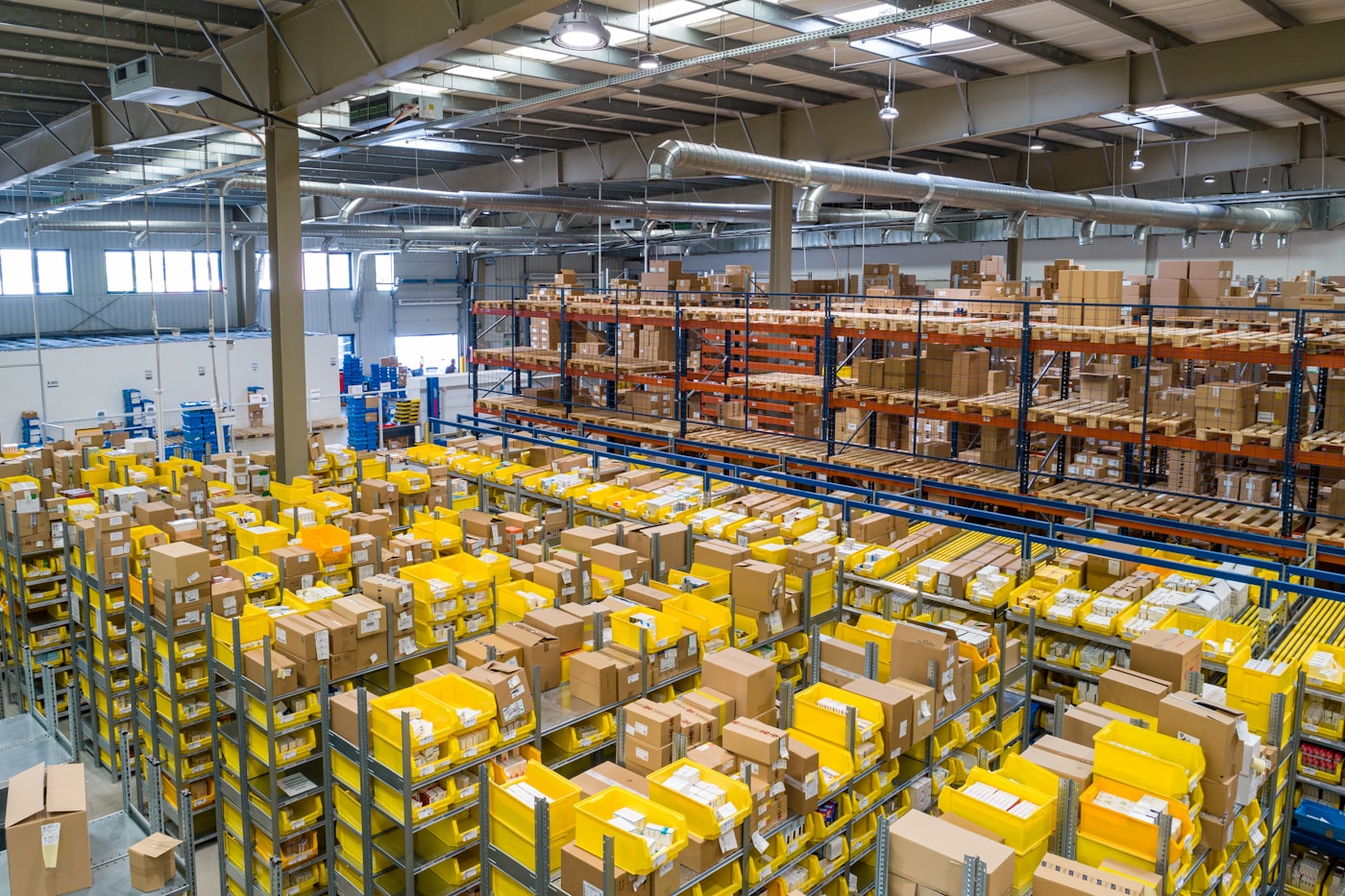
Logistics warehouse with pallets ready for shipment

The truck's fixed route currently connects a single distribution centre to one nearby store, moving dry-goods deliveries daily.

⚖️ How Germany's Law Makes This Legal

This deployment didn't happen in a legal vacuum. Germany's Autonomous Driving Act entered into force in July 2021, establishing a legal framework specifically allowing Level 4 vehicles to operate on public roads beyond limited trials, according to AI News.

The KBA approves vehicles with autonomous driving functions, while the relevant state authority, or Autobahn GmbH for federal trunk roads, approves the specific operating area the vehicle is confined to, per the same report. According to the KBA's publicly accessible list of trial approvals, this particular permit was granted on August 14, 2026, and remains valid until at least February 28, 2027, according to electrive.com.

💡 AI Spotlight Take

Germany's careful legal scaffolding, defined operating areas, mandatory technical supervision, a specific minimal-risk stop procedure, is exactly why this permit is being treated as such a big deal. The hard part usually isn't building the truck, it's convincing a national regulator with some of the world's strictest road safety rules to sign off.

Even with no driver inside the vehicle, German law retains human technical supervision. A remote technical supervisor can deactivate the vehicle or approve certain manoeuvres when the automated system requires intervention, though the law doesn't require continuous, permanent monitoring during normal autonomous driving, according to AI News.

Chemical-Free Farming Is Now Open To Investors

For decades, farmers have relied on herbicides and heavy equipment to control weeds.

Greenfield Robotics is working to change that.

BOTONY robots navigate crop rows and mechanically remove weeds, giving farmers an alternative to blanket herbicide applications and intensive tillage.

The potential benefits are significant:

  • Clean food supply

  • Reduce reliance on agricultural chemicals

  • Reduce unnecessary soil disturbance

  • Help farmers protect crops from weed competition

  • Support more sustainable farming practices

And the market is enormous.

Greenfield estimates more than 250 million acres of broadacre cropland in the U.S., with more than 100 million acres in its initial serviceable market.

With the Reg A+ now live, investors can participate in Greenfield Robotics' growth story.

This Reg A+ offering is made available through StartEngine Primary, LLC, member FINRA/SIPC. Please read the Offering Circular and related disclosures before investing. This investment is speculative, illiquid, and involves a high degree of risk, including the possible loss of your entire investment.

AI Spotlight — Lidl Puts a Driverless Truck on German Public Roads (Part 2)

👷 The Driver Shortage Behind the Push

Lidl and Einride have explicitly linked this project to driver shortages and the continuity of goods movements, and the numbers behind that framing are stark. The International Road Transport Union estimated in June 2026 that roughly 502,000 truck-driver positions were unfilled across Europe in 2025, representing 13% of positions in the markets it surveyed, according to AI News.

The problem is also structurally set to worsen. The IRU expects around 20% of Europe's current driver workforce to retire within five years, and around two-thirds of European operators surveyed said they had already turned down new contracts because they couldn't find enough drivers, per the same report.

Europe's Driver Shortage By the Numbers

502,000

unfilled truck-driver positions estimated across Europe in 2025


20%

of Europe's current driver workforce expected to retire within five years


3,000+

pallets the truck is expected to move during the four-month pilot

Cargo truck on a European highway at dusk

Europe's freight industry is facing a widening driver shortage as veteran drivers retire faster than new ones enter the workforce.

🛰️ What Actually Keeps the Truck Safe

Einride says its autonomous driving stack combines machine-learning-based navigation with an independent deterministic safety checker, plus a redundant sensor suite of lidar, radar, and cameras, according to AI News. Separately, the company's autonomous technology is described as analyzing more than 5 million data points per second to navigate routes, detect objects, and anticipate braking distances, per a European Commission Horizon Magazine report.

Before deployment, the system goes through simulation, hardware- and vehicle-in-the-loop testing, proving grounds, and site validation. Sweden's RISE research institute reviewed the functional safety of Einride's broader control system, including obstacle detection and cybersecurity, as part of a separate application for Swedish public road trials in 2025, and TÜV SÜD began an independent assessment of Einride's Safety Management System governance in May 2026, according to AI News.

We're excited to now bring this technology to public roads in Europe's largest road transport market, and to prove its value together with Lidl and the broader ecosystem of Schwarz Group.

That quote from Roozbeh Charli, Einride's CEO, frames Germany specifically as a proving ground precisely because of, not despite, its strict standards, according to an EVwire report. For the pilot, the truck is also currently limited to a maximum speed of 25 km/h, according to electrive.com.

🏭 This Isn't Einride's First Rodeo

Lidl isn't the company's first proof point that autonomous trucking can move from pilot to recurring operation. Einride previously ran a two-week public-road pilot with GE Appliances in Tennessee in 2022 before putting an autonomous vehicle into full-time daily operations there in November 2023, according to AI News.

GE Appliances (US) vs. Lidl (Germany)

⚠️  The GE Appliances truck made up to seven trips a day between a factory and warehouse in Tennessee
⚠️  A remote Einride operator remained on site to monitor the GE Appliances vehicle
⚠️  Lidl's German deployment uses the country's Level 4 legal framework for true driverless public-road operation
⚠️  GE Appliances paired the truck with AI-enabled dock cameras and a robot loader, cutting loading times by 80%

GE Appliances framed its own deployment as connecting multiple automation systems rather than a single fix. "We are moving from implementing one-off solutions addressing various challenges to creating interoperability among systems," said Harry Chase, senior director of central materials at GE Appliances, according to AI News.

Supermarket exterior with delivery area visible

Lidl operates more than 3,250 stores and 39 distribution centres in Germany, but has not announced plans to expand autonomous trucks network-wide.

🧠 AI Spotlight Analysis

What makes this deployment notable isn't scale, it's precedent. One truck on one fixed route is a tiny fraction of Lidl's more than 3,250 German stores and 39 distribution centres, but it's the first time a national regulator with genuinely strict safety standards has said yes to a completely cab-less truck running unsupervised in daily commercial service.

The company's own announcement is notably light on hard numbers around cost savings, delivery times, or productivity gains, which suggests Lidl is treating this explicitly as a learning exercise rather than a cost-cutting rollout, at least for now.

💬 Quote of the Week

Einride is already running real autonomous deliveries, with real volumes on real schedules with customers in the U.S. and Europe.

The real test comes next. Lidl and Einride plan to expand the current single route into a multi-stop "milkrun" model, and further deployments across other Schwarz Group companies are already under discussion, though neither a timetable nor vehicle count has been announced.

💡 Final Thoughts

This isn't autonomous trucking arriving everywhere at once, it's one carefully chosen route in one country with unusually strict rules, deployed specifically to build a track record other regulators and retailers will watch closely. That patience is the point.

Whether this becomes the template for solving Europe's driver shortage at scale, or stays a well-documented pilot, will depend on how cleanly the milkrun expansion goes, and whether other Schwarz Group companies follow Lidl's lead.

Would seeing a truck with no cab and no driver on the road next to you change how you feel about autonomous freight? Hit reply, we read every response.

🔗 Sources and Further Reading

AI News: Lidl deploys driverless truck for store deliveries in Germany
Reuters: Einride, Lidl deploy first cab-less autonomous truck in Germany
Einride Press: Einride and Lidl Launch First Autonomous Cab-less Truck
electrive.com: Einride tests autonomous electric truck with Lidl
Automotive World: Einride and Lidl win Germany's first L4 public road permit

❤️ Enjoying AI Spotlight?

If today's edition helped you think differently about where autonomous logistics is headed, consider sharing it with a colleague, founder, or friend interested in technology.

Share AI Spotlight →

Thanks for reading AI Spotlight.

Our mission is simple: deliver clear, trustworthy, and actionable AI insights that help professionals stay ahead without the hype.