📊 How SceneSmith Held Up Against Real Judges
The researchers didn't just take their own word for how realistic the results were. In user studies involving more than 200 people, over 90% rated SceneSmith's environments as more realistic than those produced by earlier scene-generation methods, according to Interesting Engineering. Evaluators also found SceneSmith notably better at actually following written instructions, generating what was actually asked for rather than a loose approximation of it.
|
SceneSmith By the Numbers
|
200+
people in user studies, 90%+ rated it more realistic than prior methods
|
|
1,300+
virtual scenes generated using the system so far
|
|
96%
of objects remained physically stable during simulation
|
|
That stability figure matters more than it might first appear, fewer than 2% of object pairs collided with one another during simulation, according to reporting on the research. Those numbers are exactly the kind of physical grounding that separates a training-ready virtual room from one that merely photographs well.
|

The generated scenes span diverse spaces, from bedrooms and hotels to restaurants and garages.
|
🛠️ Why Simulated Practice Beats Physical Testing
It's worth being clear about what real-world robot testing actually costs, because it's what makes SceneSmith's approach genuinely valuable rather than just a neat research demo. Engineers can't easily stage every room layout or object arrangement a robot might encounter, and physical testing requires someone to manually reset the scene after every single attempt.
A tipped chair or misplaced bottle can change the next test. Meanwhile, a failed movement may damage the robot or something nearby. Simulation offers a safer alternative.
Jeremy Binagia, an applied scientist at Amazon Robotics who wasn't involved in the research, framed SceneSmith's contribution clearly, calling it "a significant advance" for providing an agentic framework that generates simulation-ready indoor environments from nothing more than a simple text prompt. An independent researcher praising the framework specifically for being simulation-ready, not just visually impressive, reinforces exactly what the MIT team prioritized.
A future household robot could, in principle, practice inside hundreds or even thousands of virtual rooms before it ever rolls into an actual kitchen, giving developers far more chances to catch a bad move or a weak action plan while the robot is still safely inside a simulator, not in someone's living room.
|
⏳ The Honest Limits Right Now
For all the promise, the researchers are candid about where SceneSmith still falls short. Creating a highly detailed scene can currently take several hours, because the AI carefully reviews every object and layout choice along the way, a genuinely significant bottleneck if the goal is generating thousands of diverse training environments quickly.
|
Where SceneSmith Still Falls Short
| ⚠️ Generating one highly detailed scene can currently take several hours |
| ⚠️ Deformable materials that change shape when touched are still hard to reproduce accurately |
| ⚠️ Real-world testing still remains essential, since homes contain unpredictable people and worn or broken objects a simulator can't fully capture |
|
The researchers believe faster computing and larger 3D object libraries will meaningfully improve performance going forward, helping robots gain the rich, varied training data they need without each scene taking hours to generate. Even then, the team is upfront that simulation reduces risky trial and error, it doesn't eliminate the need to prove a robot behaves safely once it actually leaves the digital room.
|
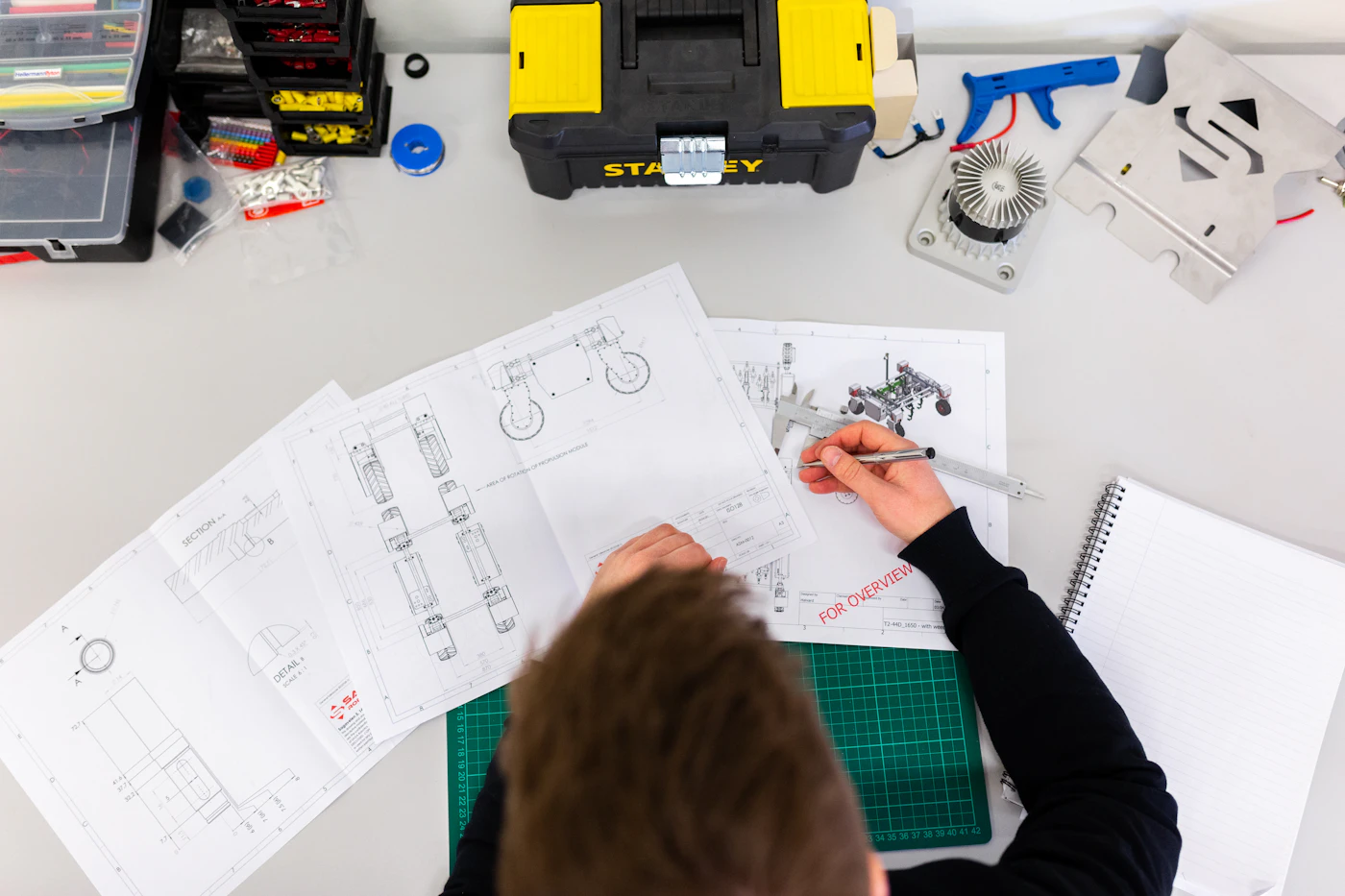
Real-world testing still matters, homes contain unpredictable people and objects a simulator can't fully anticipate.
|
🧠 AI Spotlight Analysis
The genuinely interesting move here is using AI agents to solve an AI training-data problem, one bottleneck attacking another. Robots need diverse, realistic environments to learn from, and manually building those environments by hand simply doesn't scale. Turning scene generation itself into an agentic task, with a designer, a critic, and an orchestrator, is a clever structural solution to a problem that's been quietly limiting robotics progress for years.
What separates this from a flashier "AI generates 3D worlds" headline is the specific engineering discipline behind it, the insistence on physical plausibility, functioning cabinet doors, stable object placement, gravity-settled furniture, over pure visual polish. That's the unglamorous, correct priority for anyone actually trying to train a robot rather than just produce an impressive-looking render.
💬 Quote of the Week
"SceneSmith represents a significant advance in this regard by providing an agentic framework for generating simulation-ready indoor environments just from a simple text prompt."
— Jeremy Binagia, applied scientist, Amazon Robotics
An independent expert's praise, focused specifically on the "simulation-ready" quality rather than just the visuals, is a useful signal that this addresses a real, recognized gap in robotics research, not just an MIT press release dressing up an incremental improvement.
|
💡 Final Thoughts
SceneSmith is a good example of unglamorous, foundational AI research quietly enabling a much flashier future. Nobody's going to be amazed watching a robot practice in an empty virtual kitchen, but that practice is precisely what stands between today's clumsy household robots and ones that can reliably handle your actual, cluttered, unpredictable home.
The honest framing is that this reduces risk and accelerates training, it doesn't eliminate the need for careful real-world testing before a robot works around people and property. Whether faster computing and bigger object libraries close the remaining gaps, hours-long generation times, deformable materials, will determine how quickly this kind of virtual practice becomes standard across the robotics industry.
Would you trust a robot in your home more if you knew it had practiced in a thousand virtual rooms first? Hit reply, we read every response.
|
🔗 Sources and Further Reading
|
❤️ Enjoying AI Spotlight?
If today's edition helped you see how AI is quietly solving robotics' biggest bottleneck, consider sharing it with a colleague, founder, or friend interested in technology.
Share AI Spotlight →
|
|
|
Thanks for reading AI Spotlight.
Our mission is simple: deliver clear, trustworthy, and actionable AI insights that help professionals stay ahead without the hype.
|
|